
Colosseum tickets and access
Rome Colosseum Inside: Route and Access Guide for 2026
Plan what to see inside the Rome Colosseum, from the standard levels and museum to separately ticketed arena, underground and attic routes, with clear pacing advice.
· Independent travel guidance
Open the guide sections11
- Rome Colosseum inside: start with the whole site
- Plan your Rome Colosseum inside route
- Use the seating bowl to read the Colosseum
- Understand the underground from above
- Decide whether the Colosseum arena adds enough
- Check the museum and upper terraces
- Fit the interior visit to your group
- Prepare for Colosseum entry checks
- Continue to the Forum without rushing
- FAQ
- Verdict
Seeing the Rome Colosseum inside is a different task from taking a photo outside. You need a timed ticket and a route that fits the spaces you want to see. This guide helps you make sense of the site from the main levels, then decide whether the arena or underground, or attic is worth a separate access choice.
For a first visit inside the Colosseum, the standard levels give a broad view of the seating bowl, exposed underground and site structure. Arena, underground and attic access need products that name those spaces. Choose the route before buying, then use the timed entry as the anchor for your day. Keep the Forum as a separate walking block and follow the allowed stay on your ticket.
Rome Colosseum inside: start with the whole site
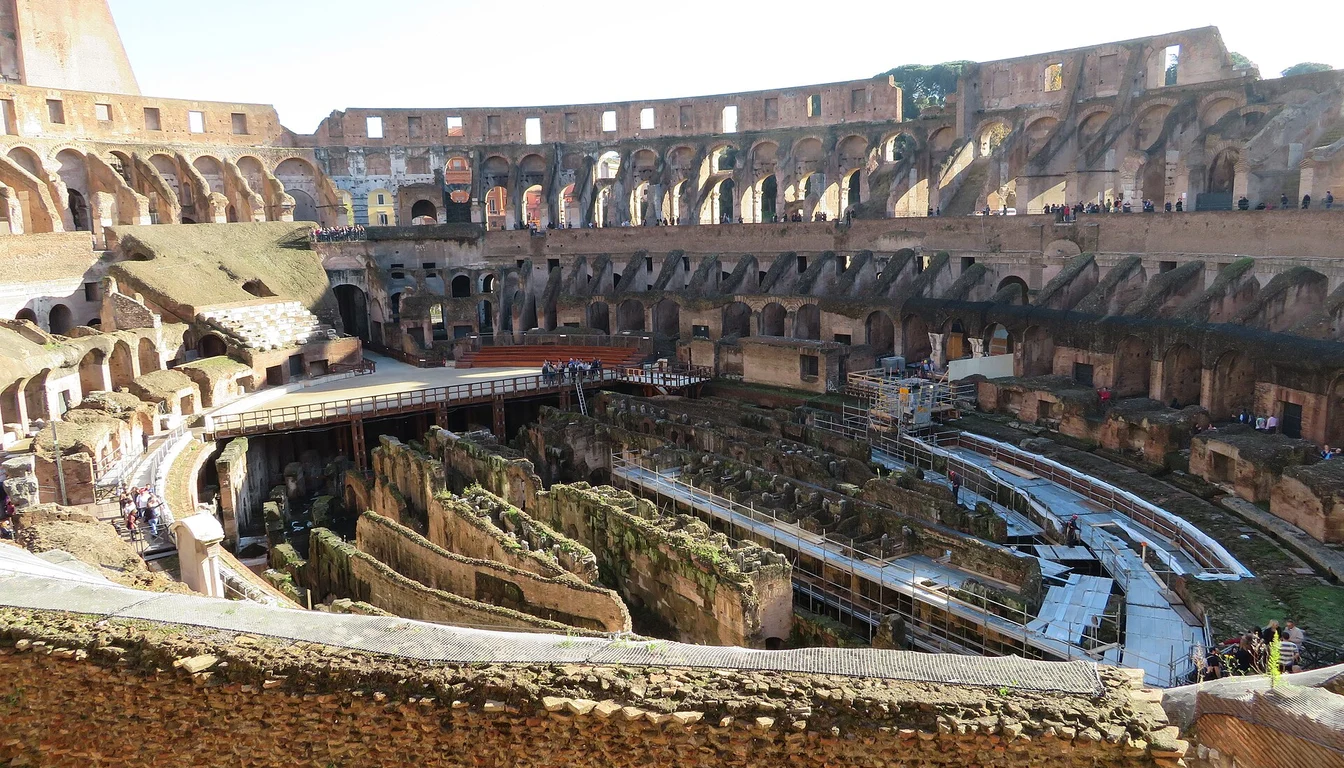
The easiest way to make sense of the interior is to start with its scale. Look across the oval before focusing on a small detail. Notice the seating bowl, the exposed space below and the surviving walls. That first view gives a frame for everything a guide or audio route explains later.
The park's site page was checked on 14 October 2026. It describes the site and its visitor routes. The standard entry product names the first and second levels. It also includes the museum and panoramic terraces. It excludes the arena and underground access.
Do not try to tick off every visible stone. Choose a few things to understand: how people moved through the arches, how the seats faced the arena and how the spaces below served the shows. You can see evidence of those uses without needing every extra route.
At each viewpoint, pause long enough to compare the same space from another height. A detail that is hard to read close up can become clear from above. A wider view also helps explain why the site needed so many entrances and circulation passages.
Plan your Rome Colosseum inside route
Read the included spaces before entering. If you have the standard route, follow its current signed path rather than searching for an entrance to an extra area. A ticket title or a photo of the arena does not override the access list.
With a guide, let the group know if stairs or long standing periods are difficult. It is better to ask before the route reaches a problem than to fall behind. Confirm where the visit ends and whether you can continue independently within the ticket terms.
For a self-guided visit, choose the main viewpoints first. The allowed stay is limited, and an unplanned circuit can use time without helping you understand the site. Save the ticket and any audio instructions before travel so phone reception is less important.
Keep the slot for an extra space at the centre of your interior route. Some products have a meeting after you enter the site. Know where it is before starting the standard section. Do not take a long detour because the next gallery looks interesting.
Use the seating bowl to read the Colosseum
Look from the arena area upward, or from a terrace downward, depending on your ticket. The bowl's curve helps explain how the audience faced one shared performance space. The height of the surviving wall also shows how much of the site rose above the floor.
Then look at the passages. They are part of how the site worked, rather than empty space between the sights. Compare the width of a corridor with the size of the crowd the site was built to handle. Look at how the entrances lead to stairs and terraces. Those links explain more about the structure than a single front-facing photo.
You do not need to guess which exact seat belonged to whom. Use the current interpretation panels or your guide for claims about seating arrangements. This site avoids attaching unsourced stories to visible stones just to make the visit sound dramatic.
A useful photo combines a piece of the wall with the open interior. That shows the relationship between the surviving structure and the oval space. Save close-up photos for details you can identify later, such as a clearly labelled feature.
Understand the underground from above
The exposed underground spaces are visible from parts of the standard route. Seeing them helps explain why the arena was more than a flat performance floor. The chambers and passages formed a working system below the spectators' view.
A view from above is not the same as walking below. It gives the plan of the space. A booked underground route gives a closer look at the corridors and mechanisms. Pick based on the kind of explanation you want rather than the idea that standard entry is incomplete.
The underground access guide explains ticket choice and route limits. If that route is not open for your date, the standard view remains useful. Ask a guide to explain the visible layout, or use the park's interpretation to connect the shapes you can see.
Do not expect an untouched underground room. The visitor route passes through archaeological remains within a managed site. Follow barriers and instructions even when a closed passage looks like a shortcut to the next stop.
Decide whether the Colosseum arena adds enough
The arena changes your viewpoint. Instead of looking down from the seats, you stand at floor level and look up into the bowl. That can be the main reason to pay for this access. It does not by default add a long history lesson or underground entry.
The arena guide separates a short floor-only product from a longer route with the usual levels. Choose the short product if the floor view is all you want. Choose the longer one if you also want the standard circuit and museum.
Compare the routes before buying two tickets. A guided arena visit may already include the interior spaces covered by standard entry. A second product can duplicate that route. The useful question is what the second booking adds, not whether it uses a different name.
For a short Rome stay, one well-chosen interior route is often enough. Use the remaining time for the Forum, another part of the city or a rest. A full day does not need every possible Colosseum viewpoint.
Check the museum and upper terraces
The standard access list includes the Colosseum Museum. Treat the exhibits as context for the structure rather than a stop to skip by default. If you have limited time, use a few clearly labelled objects or panels to answer the questions raised by the view outside.
The upper terraces give a different view down across the oval and outward toward the surrounding ruins area. That can be useful even without the highest attic route. It lets you connect the site with the nearby Forum and Palatine.
The attic guide covers the higher route and steep final steps. Do not assume every upper level is part of standard entry. The lift pictured in some texts also does not prove that the entire attic route is step-free.
If heights worry you, choose viewpoints that feel comfortable and speak to the guide before the climb. If stairs are difficult, ask about the real route and return. A general access statement for the site may not cover each extra level.
Fit the interior visit to your group
People can want different things from the same visit. One person may want to listen to a guide. Another may want to walk and take photos. Decide in advance whether the group stays together or reunites at a clear point after the route, subject to the ticket terms.
Children often do better with a few visible tasks than a long list of facts. Ask them to find an arch, compare the height of two walls or follow the line of the arena. Use the guide's explanation to connect the observation to the site's use.
Do not promise a child that every ticket goes onto the floor. Explain the included route before arriving. Knowing what to expect can prevent disappointment when the arena is visible but the ticket does not grant entry.
Carry water and keep room for a break before the next walk through the ruins. Standing, stairs and crowds can feel more tiring than the short distance inside suggests. If the group is tired after the site, use the allowed wider ticket window rather than forcing the longest possible same-day plan.
Prepare for Colosseum entry checks
Save the receipt and bring the required identity document. Keep them ready before reaching the checks. Search for the correct gate using the booking instructions. The site's map pin alone is too broad for an exact route.
Small, useful packing makes the checks and stairs easier. Avoid carrying more than you need for the visit. Read current prohibited-item and bag instructions in the booking terms rather than relying on a generic travel packing list.
Timed entry does not remove all queues. Security, ticket and identity checks remain part of the visit. A phrase such as skip the line needs a clear explanation of which queue it covers. It says nothing about the pace inside or your right to enter extra spaces.
The location guide separates the station from the meeting point and entry gate. The opening-hours page explains the difference between last entry, closing time and your own booked slot.
Continue to the Forum without rushing
The combined ruins area deserves its own plan. It is not a room at the end of the Colosseum route. Check where you enter, where you expect to finish and whether the Palatine climb suits the group after the site.
If the Colosseum slot is later, the Forum may work first under the ticket's rules. Leave enough time to get to the site gate. If the slot is early, the Forum can follow after a rest. The Forum-Palatine guide helps choose the order.
FAQ
What can I see inside the Colosseum with a standard ticket?
The standard product names the first and second levels. It also includes the museum and panoramic terraces. You can view parts of the exposed underground from above, but that is different from walking below. Arena, underground and attic routes require products naming those spaces. Check the current inclusion list when booking your timed entry.
Can I go inside the Colosseum without a tour?
Yes. A self-guided admission ticket can cover the standard route or another specifically named access product. You still need the booked entry and must follow the route rules. A guide adds explanation and group structure; it is not required simply to see the main interior on a standard ticket.
Does seeing the underground mean I can enter it?
No. Views down into the exposed spaces from a terrace or the arena do not grant underground entry. A product must name that access. Choose the standard route if the broad view is enough, or a booked underground visit if the corridors and workings below are your main reason for coming.
How should I plan the interior and Forum together?
Treat them as separate walking blocks around the fixed Colosseum time. The Forum can come before or after when the ticket permits it. Check the allowed dates and single-entry terms. Leave room for checks, the walk between gates and a break instead of fitting the whole area into a short gap.
Verdict
To see the Rome Colosseum inside well, choose the spaces that matter and give them your attention. The standard route can be enough for a first visit. Compare the ticket choices if a floor-level or underground, or high viewpoint is a clear main goal for your group.