
Colosseum tickets and access
Colosseum and Forum with Palatine Hill: 2026 Route Guide
Plan the Colosseum and Forum with Palatine Hill around one timed entry. Compare ticket windows, route order, stairs, breaks and a realistic combined visit.
· Independent travel guidance
Open the guide sections17
- Colosseum and Forum ticket choices
- Colosseum and Forum order around the timed slot
- Understand the Forum before choosing every stop
- Add the Palatine as a real climb
- Choose the gate before choosing the route
- A site-first route with room to pause
- A Forum-first route without risking entry
- Use a two-day window carefully
- Check which extra sites your ticket includes
- Build shade and water, plus food into the day
- Fit the combined visit to limited ability to walk
- Keep children interested in the Forum
- Decide where a guide adds the most
- Avoid treating the wider visit as a rushed extra
- End near a sensible onward route
- FAQ
- Verdict
The Colosseum and Forum share common ticket choices. But they are different visits. The site uses a fixed entry time. The Forum-Palatine area needs a walking plan of its own. This guide helps you choose the order, use the ticket window correctly and keep the combined day comfortable without racing through the ruins.
Plan the Colosseum as a timed slot and the Forum-Palatine area as a separate walking block. Standard and Full Experience tickets use different validity windows, with single-entry rules for each area. Choose the order by your site time and daylight, plus walking stamina. Confirm which extra sites your product includes, allow for stairs and uneven paths, and keep a rest before the longest part of the route.
Colosseum and Forum ticket choices
The park's standard ticket, checked on 14 October 2026, includes one timed entry to the Colosseum and one entry to the Forum-Palatine area under its stated window. It lists the main site levels and museum, plus wider-area access.
The park's ticket menu distinguishes that choice from Full Experience products and a Forum-only pass. A Forum pass does not grant Colosseum entry. A Full Experience label can also refer to different named spaces inside the site.
Choose the site access first. Standard entry can suit a first visit. Arena or underground access suits an exact viewpoint or route main goal. Then check what wider-area access comes with it. Buying another Forum ticket may be unnecessary if the first product already covers the walk you want.
Read the real validity text rather than treating every combined ticket as a two-day pass. The ticket has single-entry limits. Remaining time on it does not prove a right to keep leaving and returning to the same site.
Colosseum and Forum order around the timed slot
An early Colosseum slot usually makes the site the first major stop. The Forum opens later, and trying to fit a ruin walk before the slot can create a rush. Do the site, take a break when useful and start the wider area afterward if the ticket permits it.
An afternoon Colosseum slot can make the Forum first a workable choice. The important part is the finish: choose an exit and leave enough time to reach the site's gate. A large walking loop with no exit plan can put the timed booking at risk.
Use the opening-hours guide for the dated autumn limits. Late closure in one month does not prove the same route fits the next. Shorter daylight and an earlier last entry make a tightly packed afternoon harder to manage.
A split across allowed days can suit a tired group or a deeper interest in the ruins. Check the exact dates on your product before assigning one area to the next day. The fixed Colosseum time remains fixed even if the wider ticket window gives freedom.
Understand the Forum before choosing every stop
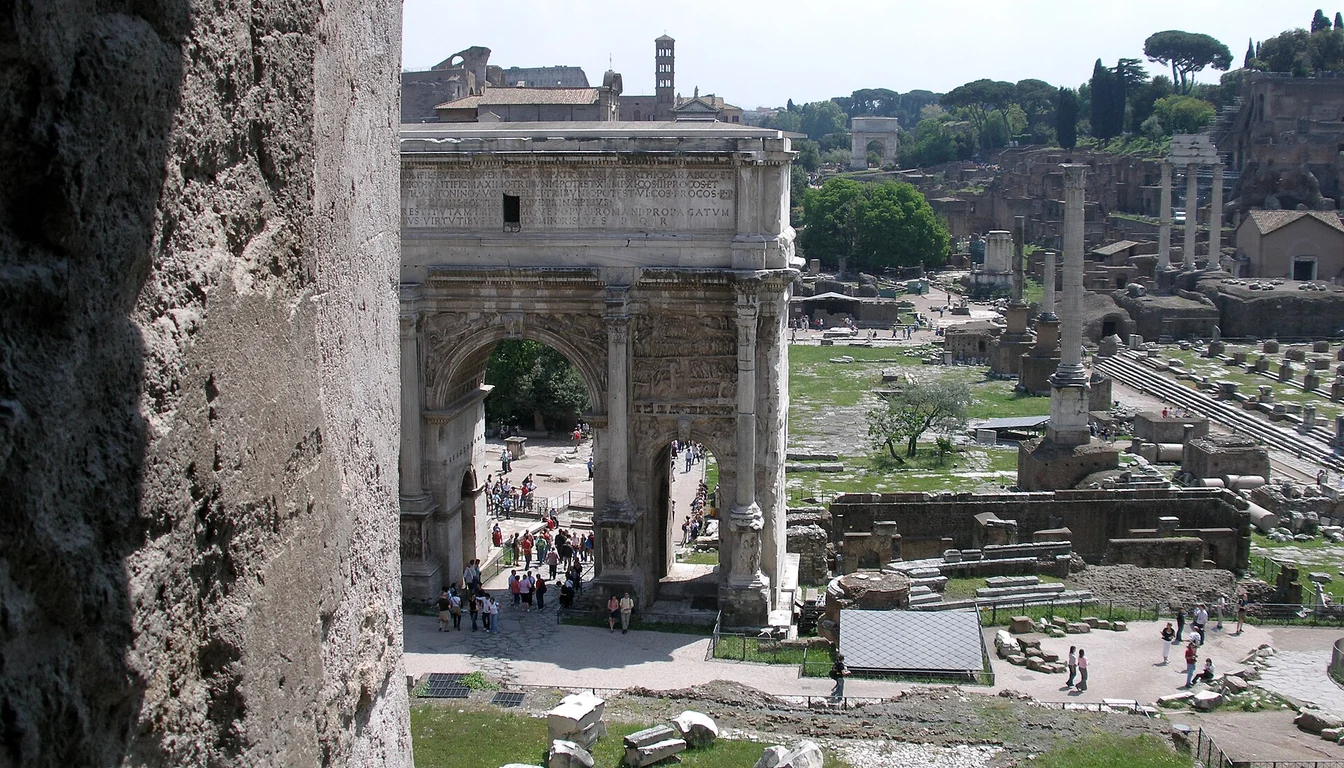
The Forum is a field of remains rather than one intact site. It is easier to read when you start with the main open space and paths, plus surviving structures. The park's Forum page provides the setting and current visitor details.
Find a broad view before concentrating on small fragments. Look at how the ruins line the main paths and how higher ground frames the area. This helps you connect temples, civic spaces and meeting places without memorising a long list of names.
Choose a few clear tasks. Compare a standing column with its broken neighbours. Look at the size of a surviving doorway. Follow the line of an ancient route across the ruins. Use a panel or guide to explain the feature, rather than guessing a story from its appearance.
You do not need every extra room or exhibition to make the walk useful. A smaller route that gives time to understand visible remains can be more satisfying than a hurried circuit. Decide in advance whether this is a broad first visit or a more detailed day among the ruins.
Add the Palatine as a real climb
The Palatine sits above the Forum and uses the same broad visit to the ruins area. The park's Palatine page describes its remains and visitor access. It is a hill route. So include the climb and the way back in your plan.
The high position gives a wider view of the city and the Forum below. That view can make the layout easier to understand after the ground-level walk. The remains on the hill also tell a different story from the public spaces below, with large residential and palace structures.
Do not add the hill only because it appears in the ticket title. If stairs or slope, or heat are likely to be difficult, ask about a shorter suitable route. If the group is tired after the Colosseum, the full climb may be a poor use of the remaining energy.
For a hill-focused visit, read the Palatine guide. This combined guide stays focused on fitting the areas together. That page helps choose the hill as the main visit.
Choose the gate before choosing the route
The wider area has several entrances. The Colosseum has its own ticketed entry. A combined ticket does not make one queue serve all the sites. Your starting gate affects the amount of walking before a chosen stop.
If the Colosseum comes later, think about which exit leaves you closest to the booked gate. If the Forum comes after the site, choose the start that fits the route you want through the wider area. Read the current gate instructions and any closure notices before travel.
The location guide separates nearby station names, group meetings and entry gates. Save the written instructions as well as the map points. A map dot placed in the ruins may not indicate a usable entrance.
If a guide leads the route, confirm where the guided part begins and ends. Some products guide only the site, then leave you to use the wider entry yourself. Others take the group through all three areas. Knowing that difference prevents an unexpected long walk or an unplanned gap.
A site-first route with room to pause
Start with the booked Colosseum entry. Keep the required documents and receipt ready, and use the allowed route time without worrying about covering the Forum at once. The site deserves your attention while you are inside.
After the site, assess the group before entering the wider area. Water, food and a brief rest can make the next walk more comfortable. Check whether leaving after entering the Forum would use up its single entry before you plan a longer break outside.
In the Forum, start with a broad view and a few clear features. Add the Palatine if the group still has energy and the hours allow it. You can choose a shorter route rather than turning the entire area into a required checklist.
Keep the later part of the day open when possible. A fixed slot elsewhere can force you to rush the last stop at the ruins. An open evening or exterior walk gives more room if the day proves tiring.
A Forum-first route without risking entry
Set a latest time to leave for the Colosseum before starting. Base it on the walk to the correct gate and the booking's earlier arrival instruction, not just the site entry minute. Keep that time visible in your plan.
Choose a route that ends sensibly. A climb to the far side of the hill just before the slot can add unnecessary backtracking. Put the largest walking block earlier and finish nearer the exit you intend to use.
Do not let a newly opened room or an extra exhibition erase the buffer. Those stops can be interesting. But the Colosseum slot is the fixed commitment. If the ticket allows another day for the wider area, check the single-entry rule before assuming you can return for missed stops.
After the site, keep any further plan light. You have already done the longer outdoor walk. The inside guide can help you choose the main interior tasks without trying to see every viewpoint when tired.
Use a two-day window carefully
Some Full Experience products have a two-consecutive-day window. That can let you give the Colosseum and wider area different days within the allowed terms. It does not mean two full site visits or unlimited access to the ruins.
Write down the fixed site day and the allowed wider-area dates before planning the split. Check the real receipt if the date relationship is unclear. Similar wording across products does not prove identical rights for every booking.
A split can suit a visitor with an extra route inside the site. The underground or attic slot can use more focus and energy than a standard overview. Giving the Forum another allowed day may make the whole visit easier.
It can also suit a visitor who likes to read panels and study the ruins slowly. The trade-off is using two parts of the trip for the same broad area. Decide whether that fits your Rome plan rather than treating the longer window as a reason to fill it by default.
Check which extra sites your ticket includes
The park lists additional rooms and sites on some products. Access depends on the ticket and current operation. A site appearing on a general page does not prove that your entry includes it or that it will be open on the day.
Compare the current inclusion list with your exact interests. If an indoor room is the main reason for choosing a pass, check its opening days and notices. Restoration or installation work can affect an single space even when the wider area remains open.
Avoid using a long inclusion list as a plan to visit everything. The list describes rights, not a recommended pace. Choose the spaces that help you understand the route or match a clear interest.
If a guide service is included, ask whether it covers those extra spaces or only the main ruins. Ticket rights and guide time are separate. A product can grant access to rooms after the guide leaves, which can be useful if you know to plan for it.
Build shade and water, plus food into the day
The walk through the ruins is largely outdoors. Plan water and clothes for the weather, and use shoes that suit uneven surfaces. Do not treat a short map distance as proof of an easy walk when the route includes slopes and stairs.
Take a break before the part that needs the most effort. A rest between the site and ruins may be easier to arrange than one after you enter the single-entry area. Check current rules for what you can bring and where food is allowed.
On warm days, choose the route by comfort as well as opening hours. If the group needs frequent pauses, reduce the stop list. No ticket price requires you to walk every path to justify the booking.
For rain, think about footing first. Wet stone and uneven ground can make the route more difficult. Check current notices, and ask how a guided tour handles limits or a shorter route. We do not promise that every area will operate in all weather.
Fit the combined visit to limited ability to walk
Ask about the exact paths, slopes and stairs, plus return route. A general access statement for a large site cannot answer every part of the walk. Say what you need in plain terms, such as a route with no stairs or shorter standing blocks.
Separate the needs for each area. A suitable Colosseum route does not prove that the Palatine climb also works. An arena product, standard interior and attic route have different access questions as well.
If the group may split, plan a clear reunion point and make sure each person has the correct ticket details. Avoid sending someone on a longer loop without knowing how they will return to the rest of the party.
The private-tour guide explains how to ask for a pace suited to your party. A private guide can help plan the route. But cannot remove the site's physical limits or ticket rules.
Keep children interested in the Forum
A few visual tasks can help more than a long history list. Ask a child to find a line of columns, compare the size of two arches or spot a route leading uphill. Use a panel or guide to attach a clear fact to the observation.
Set the route length honestly. If everyone expects a short walk, adding every extra room can feel like a surprise. Choose a small number of main stops and keep another optional. That makes it easier to finish while the group still has energy.
Food and water planning matters with children, especially when the Colosseum slot comes after the outdoor walk. Leave enough room for a break before the timed entry. A hungry rush to the gate can make the site visit harder than it needs to be.
Check child ticket arrangements for the exact products. A discount rule for entry does not prove free guide service or remove the need to book an extra-route place. Confirm the whole party together.
Decide where a guide adds the most
The Forum can be harder to read than the Colosseum because more structures survive as fragments. A guide can explain what a layout or remaining wall represents. That can be useful if you want more than a broad walk through the setting.
The Colosseum gives stronger visual clues about its main function. A standard guided first look there may be enough for someone who prefers to walk the ruins at their own pace. Another visitor may want the opposite: independent site entry and guided interpretation of the wider area.
Compare the guide's real time in each place. A product titled for all three areas might distribute that time unevenly. Ask how much is explanation and movement, plus free time rather than counting only the total duration.
Use the guided-tour selector for the access and service checklist. It keeps the guide format separate from the ticket rights so you can compare two tours fairly.
Avoid treating the wider visit as a rushed extra
A common planning error is to spend all available attention in the site and then hurry through the ruins because the ticket includes them. Choose the combined route only if the wider area matters to you too.
If the group wants a brief archaeological overview, plan that openly. A few well-read stops can be enough. You do not have to pretend the short route covers every part of the Forum and Palatine.
If the ruins are the main interest, give them the longer block and use the Colosseum slot as an anchor around it. The right balance depends on the visitor task, not the order in which the places appear in the ticket title.
Keep a record of the route you actually intend to do. Starting gate, main stops, optional climb and exit, plus next journey are enough. A simple plan is easier to adapt if one space is closed or the weather makes the longer route uncomfortable.
End near a sensible onward route
Think about where you will finish before the final climb or detour. If you need public transport, an exit near the route home may be more useful than another optional viewpoint. If you have an open afternoon, choose the finish that leaves room for a break.
The nearby Capitoline Hill guide can help if you want another viewpoint after the ruins. But judge it by remaining energy. It is a separate city stop, not part of the combined entry.
Do not use a map's straight-line distance as your entire travel estimate. You need to reach a usable exit, walk on public paths and find the correct station entrance. Those steps take time even when the next place looks close.
For the next Rome day, leave enough recovery after a long outdoor visit. A less rigid morning can help if this route proves tiring. The useful outcome is a visit you can remember clearly, not a list of places crossed at speed.
FAQ
Does a Colosseum ticket include the Roman Forum?
The standard combined product and several Full Experience tickets include the Forum-Palatine area under their own validity terms. Check the product you buy rather than assuming every monument service includes it. A Forum-only pass works the other way: it does not grant Colosseum entry. Guide time and ticket access also need separate checks.
Should I visit the Colosseum or Forum first?
Choose by the fixed Colosseum time. An early slot usually makes the monument first easier; an afternoon slot can allow the Forum first if the ticket permits it. Plan the exit and walk between gates. Leave a buffer for checks instead of finishing a long ruin loop just before the appointment.
Can I visit the Forum on a different day?
Some products allow a split within a stated validity window, while others use different terms. Check the actual permitted dates and single-entry limit before assigning the Forum another day. The fixed Colosseum appointment remains fixed. Time left on the ticket does not allow repeated returns to the same area after leaving.
Is Palatine Hill part of the same visit?
The Palatine belongs to the wider archaeological area covered by relevant combined tickets. It adds a hill route and different remains, so plan the climb separately in your walking budget. Check current access and included extra sites. If the group is tired or stairs are difficult, choose a shorter suitable route instead.
Verdict
The Colosseum and Forum work well together when the site time anchors a realistic walking plan. Choose the ticket window carefully, keep the Palatine climb optional for tired visitors and avoid repeated-entry assumptions. Start with the ticket selector and give the wider ruins the time they deserve.