
Rome neighborhoods
The Jewish Ghetto in Rome: Plan a Respectful Visit in 2026
Understand the Jewish quarter, choose a walk by the Tiber and plan heritage visits with care.
· Independent travel guidance
Open the guide sections13
- Understand the Jewish Ghetto in Rome
- Start with the Portico d’Ottavia area
- Give the community history a real place in the visit
- Choose the Jewish Ghetto in Rome route that fits your time
- Check synagogue and museum access separately
- Add food without turning it into a ranking hunt
- Pair the quarter with one nearby direction
- Visit with mobility needs or children
- Take photographs with care
- Avoid shallow or rushed visits
- FAQ
- Plan the next part of your visit
- Verdict
The Jewish Ghetto in Rome is a living historic quarter, with ancient remains, local heritage and a river setting. Plan a visit that gives those layers space. A short walk can be rewarding, but the area deserves more care than a search for one meal or a quick “hidden gem” photograph.
Start with a respectful walk around the Jewish quarter and the Portico d’Ottavia, then choose one heritage visit or a river crossing to Tiber Island. Check museum and synagogue access separately. The streets are public, while worship and places of memory have their own rules. Allow time to read the area’s history, and do not let a meal replace the whole visit.
Understand the Jewish Ghetto in Rome
The quarter lies beside the Tiber in the central city. The city’s heritage guide connects its Jewish history with ancient remains, the synagogue and the island crossing. It is also a place where people live and work as well as worship today. Jewish quarter information, checked 14 October 2026.
The word “ghetto” refers to a history of enforced separation. It should not become a light label for a picturesque food district. A visitor can enjoy the lanes while also recognizing that the place carries difficult history.
Take the visit at a pace that lets you read a sign or stop at a marker. The point is not to learn every date before arriving. It is to understand why the quarter matters and avoid reducing it to an atmosphere you consume between other sights.
Start with the Portico d’Ottavia area
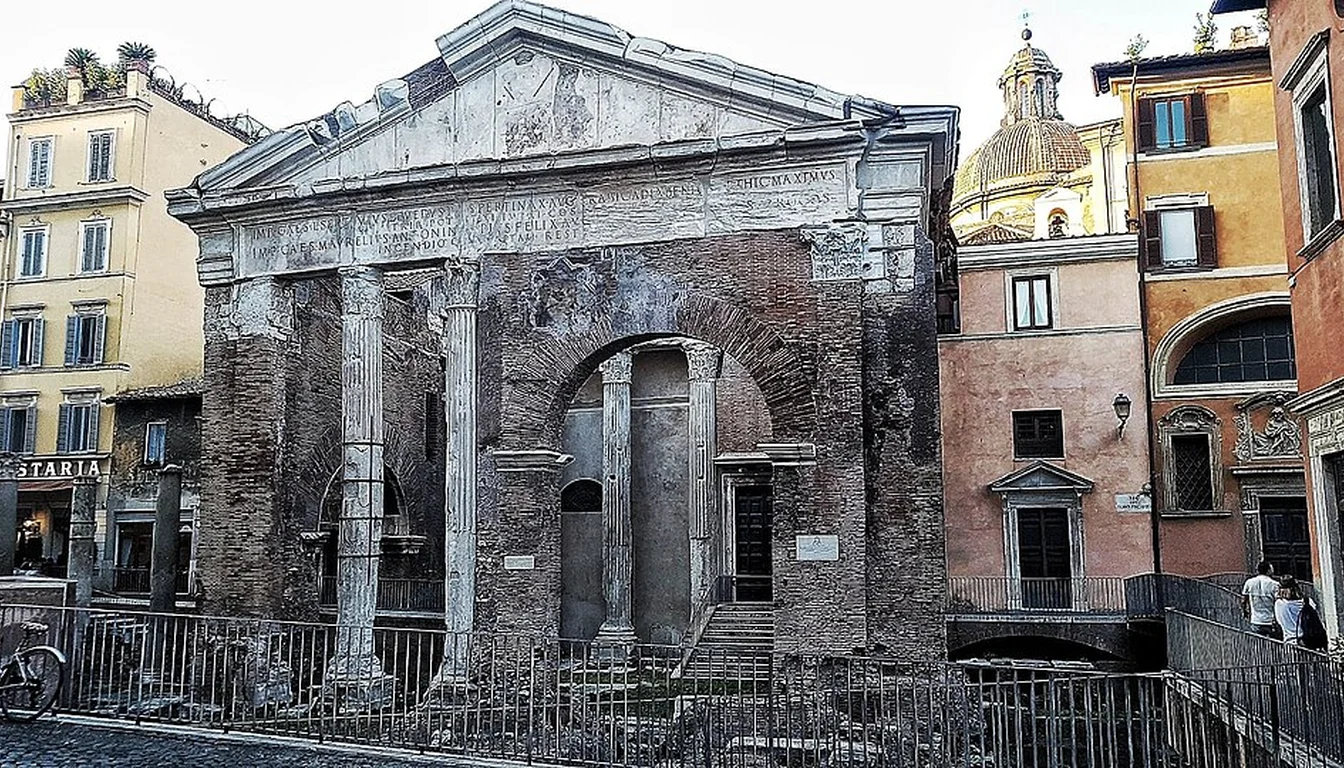
The ancient portico is one of the quarter’s clear landmarks. Its surviving remains link the quarter to the older city beneath and around it. The city listing explains the portico’s ancient setting and the later layers around it. Portico visitor information.
Look from a public path before choosing to go closer. Read any current signs and barriers, because an ruins area can have a controlled route even when it looks open from the street. Do not climb stones for a clearer photograph.
The site is a useful anchor for a short walk. Save it as a map point, then choose a heritage visit, the river or a nearby ancient-city route. Starting with one clear landmark makes it easier to keep the rest compact.
Give the community history a real place in the visit
The area also remembers forced arrests and loss. The city’s district information marks the events of October 1943 and the small memorials that preserve their memory. Stop with care if you encounter them. They are not decoration for a portrait. Historic quarter guide.
You do not need to photograph a marker for a person to make the stop meaningful. Read what is there, give others room and keep your party’s tone suited to the place. If children are with you, explain the purpose in plain language before moving on.
Avoid making a sweeping claim that a whole community shares one opinion or experience. A short visitor guide cannot speak on its behalf. Use the visit to learn from the place’s own heritage information, and treat the present-day quarter as more than its past.
Choose the Jewish Ghetto in Rome route that fits your time
A short route can connect the portico area, the river edge and an island crossing. It gives you a clear shape without asking you to enter every site. The city’s quarter guide identifies the link to Tiber Island. Check your own crossing route on the day.
A longer route can include a museum or synagogue visit if you confirm the entry arrangements. Make that the fixed part of the visit. The public walk can then expand or contract around it.
- Choose a short public loop for an introduction.
- Choose a confirmed heritage visit for deeper context.
- Choose an island crossing as one onward branch.
Allow roughly ninety minutes for a slow outdoor introduction, with extra time for a meal or indoor visit. This is a planning allowance, not a timed tour. A brief passage through the quarter may take less, but it leaves little space for the history.
Check synagogue and museum access separately
The Great Temple and the Jewish Museum form important heritage stops, but you should not assume they follow public-street access. Confirm the current visitor route and ticket, plus any security arrangements before planning to enter. Great Temple visitor information.
Do not treat an open worship doorway as an invitation for a casual tour. Services, holidays or local needs can affect access. Dress and behavior should suit the place, and staff directions take priority over an old online itinerary.
If a guided visit is included in a ticket, read the timing and language. A broad “quarter walk” product may not include the indoor visit you want. Ask before buying rather than discovering the gap at the entrance.
Add food without turning it into a ranking hunt
The quarter’s culinary traditions are part of its identity, but a meal should be chosen by your actual needs. Decide whether you want a short snack, a seated lunch or a longer dinner. Then ask about the dishes and timing, as well as the setting.
Do not assume that all food sold in the area is kosher. A location or style description is not proof of certification or preparation. If that matters to you, ask the establishment about the current standard and decide from the answer.
Dietary needs also need direct checks. A dish title can hint at ingredients, but it does not tell you every stock or oil, or shared preparation surface. Explain the requirement clearly and ask about the exact meal. A queue is not proof that a kitchen is right for your party.
Pair the quarter with one nearby direction
The Tiber Island route leads toward Trastevere. The ancient-city direction can continue toward the Capitoline or Forum area. A central street route can take you toward other squares. Choose one depending on the rest of your day.
Do not use the quarter as a zigzag between all three. Each branch adds walking and changes the visit’s focus. If you already have a ticketed ancient Rome visit, leave the island or Trastevere branch for another time unless there is a real gap.
- Pick the next district before finishing the loop.
- Keep an indoor booking clear of a long meal.
- Add a rest before an uphill continuation.
If you return through the quarter later, use that pass for atmosphere or a meal rather than repeating the same landmark checklist. A second calm walk can be pleasant without adding another task to the trip.
Visit with mobility needs or children
Some lanes and stone surfaces can slow a walk. Check the actual entrance and path for an indoor heritage visit, rather than assuming that a compact quarter is easy for every visitor. A ramp at one archaeological point does not prove the whole loop is step-free.
For children, choose one object or shape to notice at the portico, then one simple explanation of the quarter’s history. Long lectures in the street can be hard to follow. A short meaningful stop with a clear onward route is often better.
Agree on a meeting place if the group splits for an indoor visit. The streets can be busy and the river edge is a different setting from the lanes. Choose a named public landmark rather than a shop doorway or a private entrance.
Take photographs with care
The old stone shapes and public river views offer clear photo subjects. People at worship, private doorways and moments of remembrance need a different approach. Do not point a camera at them simply because the street is a visitor route.
Step aside before making a longer photograph. Narrow lanes need to keep moving, and residents should not have to walk around a staged scene. Avoid arranging a group on a monument or blocking an entrance.
If a marker is the focus, keep the image respectful and follow any posted rules. A visitor does not need to document every stop. Reading and remembering can be the whole purpose of the pause.
Avoid shallow or rushed visits
The quarter is compact, but compact does not mean trivial. A meaningful short walk can still include one historic stop and a clear view of the river relationship. Give those parts time before heading to the next attraction.
- Do not describe the whole place only as a food district.
- Do not assume public access to worship spaces.
- Do not assume food standards from the location.
- Do not use memorials or private entrances as photo props.
FAQ
What should I see first?
The Portico d’Ottavia area is a clear starting landmark for an outdoor introduction. From there, choose a heritage visit or a riverward route according to your interests. Give the quarter’s history space rather than making it only a meal stop. Any synagogue or museum visit needs its own current entry check.
Can I enter the synagogue freely?
Check the current visitor arrangements, security and any guided entry before planning to go inside. Public streets and worship spaces follow different rules. An outdoor walk through the quarter does not establish access to the synagogue or museum. Keep enough flexible time to respect the actual visiting conditions on the day.
Is all food in the quarter kosher?
Do not assume every meal offered in the quarter is kosher. If that standard matters to you, ask about the current preparation and service before choosing. A location or dish name alone is insufficient. Plan the meal by the needs of your party rather than relying on the neighborhood label to answer dietary questions.
Can I combine the quarter with Trastevere?
Yes. A river and island crossing can give the route a clear onward branch, but allow enough time for both quarters. Choose which is the main visit and keep the other shorter. Adding a heritage interior or a meal makes the day longer, so avoid combining two full district plans without room to pause.
How much time should I allow?
About ninety minutes is a loose allowance for a slow outdoor introduction. Add time for a heritage interior, a meal or a longer river connection. The point is to give the history and setting attention rather than hurry between pins. Check any booked visit separately before choosing the rest of the route.
Is this a good family walk?
It can be a useful family walk when the route is short and the history is explained plainly. Leave time for questions and a rest instead of adding every nearby stop. If you plan an indoor heritage visit, check its own conditions. A meal can be another choice rather than the whole reason for coming.
Plan the next part of your visit
Verdict
The Jewish Ghetto in Rome rewards a respectful walk that joins ancient remains with local heritage. Start at a clear landmark, choose one deeper stop and keep the river branch simple. Food can be part of the visit, but the place’s history should remain visible in the day.