
St Peter's Basilica
The Holy Door after the Jubilee
The Holy Door at St Peter's was sealed in January 2026. Understand its meaning and plan an ordinary basilica visit.
· Independent travel guidance
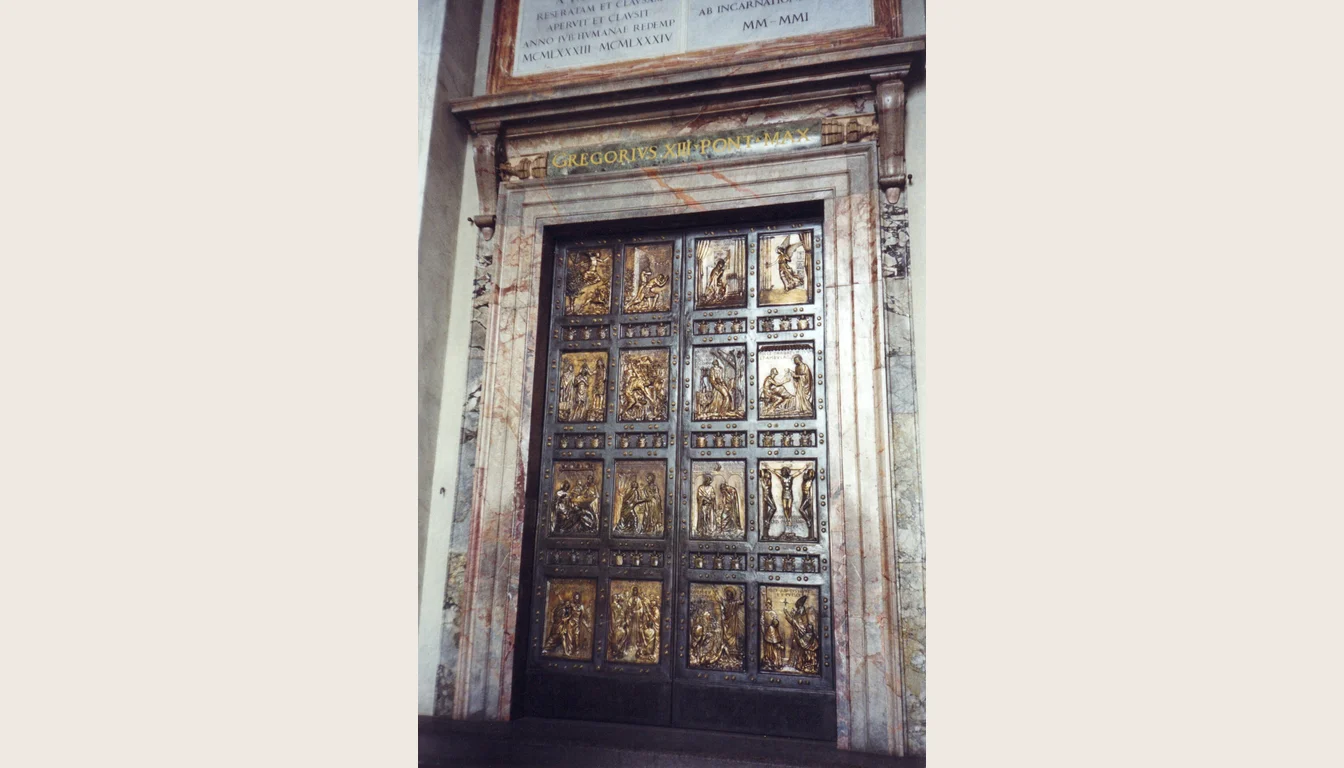
The Holy Door Vatican visitors read about in Jubilee accounts is closed after the 2025 Holy Year. St Peter's Basilica records that the door was sealed in January 2026. You can still plan a normal church visit. But you should not expect to walk through the Holy Door or buy a tour that changes its status.
The Holy Door is a Jubilee symbol, not the everyday entrance to St Peter's. It was sealed after the 2025 Holy Year. Treat older open-door photos and pilgrimage routes as historical material. Plan your current visit around the church's normal entry rules, and check a new announcement from the Basilica before assuming the door will open again.
Holy Door Vatican status in October 2026
The basilica's sealing announcement, checked 15 October 2026, records the ceremony on the evening of 16 January. It sets out the inner wall sealing the Holy Door after the Ordinary Jubilee of 2025. That is the right current starting point for a visitor.
Keep two events apart: the ceremonial closing of a Holy Year and the later work that seals the doorway. An old article may describe one stage without the other. Neither makes the door a daily entrance once the Jubilee has ended.
If your travel plan names a Holy Door crossing, revise that part before booking transport or a guide. You can retain the church visit, time for prayer and an outside look at the church. Remove the hope of passing through this doorway.
What the Holy Door means
The basilica FAQ explains the Holy Door in the context of Holy Years and worship. Its meaning goes beyond a visitor walking through an unusual entrance. Treat it as a sacred feature rather than a sightseeing challenge to complete.
A guide can explain that context. But a commercial account should not be mistaken for a religious promise. Questions about the rules for religious practice belong with the Church's current advice. A photo or a tour receipt does not by itself prove a spiritual outcome.
For a visitor who is chiefly interested in the building, the useful difference is simpler: the Holy Door has one Jubilee role, while normal entry follows the rules in use now. You do not need to make your whole church visit depend on this one feature.
Seeing the door is different from passing through it
The photo on this page is a historical photo of the door panels, taken in 2000. It shows the artwork, not today's access state. The image cannot tell you where barriers or staff will place visitors during your trip.
If you want to see the door as part of an art or architecture visit, allow the marked route to guide you. Do not block an entrance or step around barriers to copy an old photo. A distant view or a changed route may be all that is possible at one time.
Our main basilica guide explains the current entry choices. Start there if you are deciding whether to visit on your own or pay for a guide. The closed Holy Door does not turn free normal church entry into a required paid ticket.
Check a Holy Door Vatican tour description carefully
Some pages stay online long after the event they describe. Look for the date of the visit, the precise access promise and the actual named site. The word “Jubilee” in a heading does not prove a current through-route.
Before paying for any product that mentions the door, ask yourself whether the service would still be useful with the door closed. A history walk or basilica explanation may be worthwhile. A promise that depends on walking through a sealed door needs clarification from the provider before you buy.
Do not treat different religious visits as the same. A papal audience, a Mass, a church sightseeing visit and a Jubilee pilgrimage have different rules. Choose the visit you really want. Then verify that visit through the Church's current guidance.
Build a visit that works after the Jubilee
Begin with an approach through St Peter's Square. Use the outside to understand the link between the facade and portico, plus colonnade. Join the marked visitor line if the church is the next part of your plan.
Inside, choose a modest purpose: prayer, architecture or a few works of art. That gives the day value without a door crossing. If you want a deeper ancient-site visit, read the separate Scavi guide and request only what the Scavi Office's process permits.
Leave enough flexibility for a service or changed access route. A careful plan can survive a closed area because it rests on a wider aim. A checklist that depends on one doorway is much more fragile.
FAQ
Is the Holy Door open every year?
No. The door has an exact role in Jubilee years and does not operate as a normal daily church entrance. The latest sealing announcement is the right evidence for this visit. Any later opening would need a new announcement from the Basilica, rather than an assumption based on a recurring travel calendar.
Is St Peter's Basilica closed because the door is sealed?
No. Holy Door status and normal church access are separate matters. Use the main visit details for the church's current hours and entry rules. Religious services or special events may affect one day. But the sealing of the door does not mean that all basilica visits have ended.
Can a paid tour include a Holy Door crossing?
A tour cannot change the door's closed status. Read what the service really offers: help from a guide, a church visit or a historical route may all be possible without crossing it. Ask the seller to clarify any ambiguous wording before you buy. Do not assume a higher price buys an exception to Church rules.
Should I still visit if the crossing was my main goal?
Decide whether prayer, the church interior or the site's history still meets your aim. If it does, keep those parts and adjust the route. If the crossing was key, seek current Church advice before making new plans. Avoid choosing a replacement date from a guess of the next opening.
Verdict: use current Holy Door Vatican information
The Holy Door in Vatican City is closed after the Jubilee. Treat the January sealing as the current access fact. Keep historical photos and Jubilee accounts in their proper context. A normal church visit can still be useful. But it should stand on its own purpose and latest entry rules, without a promise of passing through a closed doorway.