
Churches and heritage
The four major basilicas of Rome
Understand the four papal basilicas, their different settings and the journeys between them before planning a pilgrimage day.
· Independent travel guidance
Open the guide sections9
- The four major basilicas in Rome
- Saint Peter's: choose the church before the extras
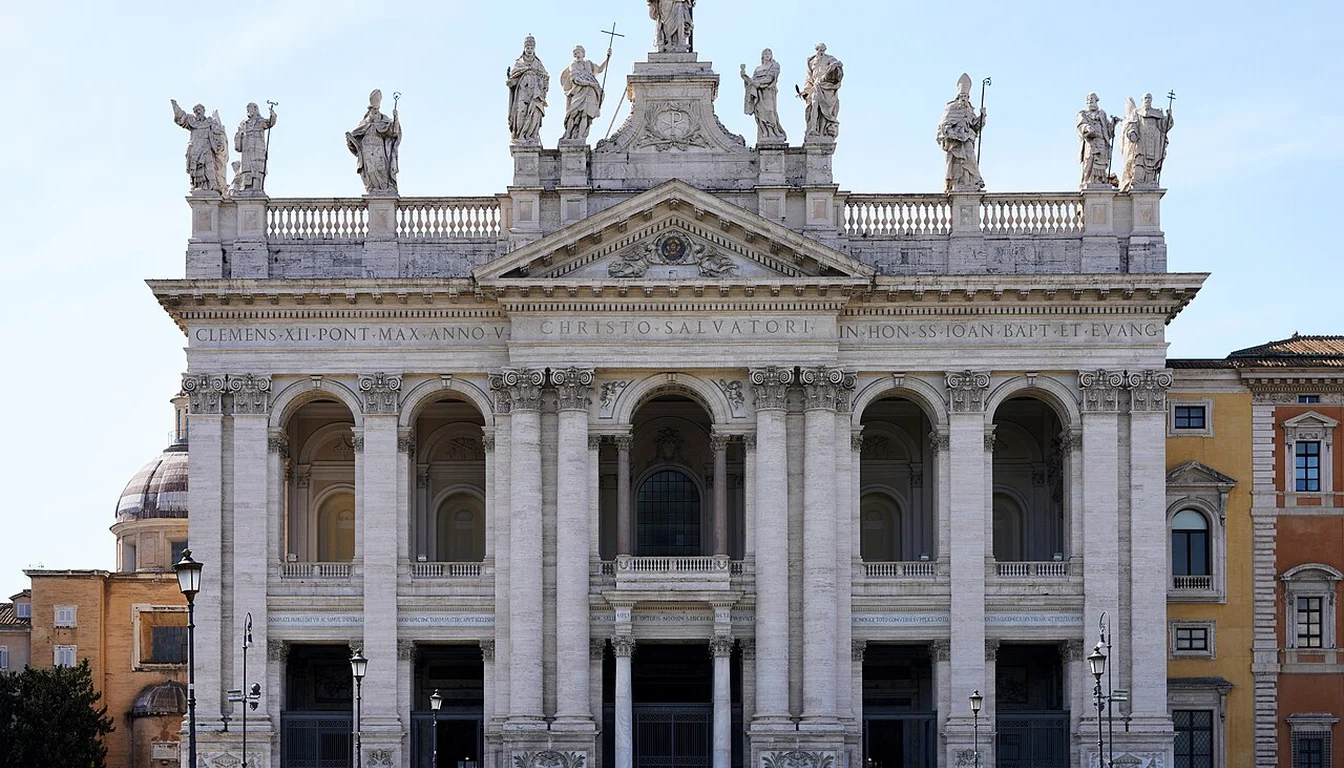
- Saint John Lateran: understand Rome's cathedral
- Saint Mary Major: make room for the interior
- Saint Paul Outside the Walls: plan the separate journey
- Plan basilicas in Rome as two or more visits
- Holy Doors are a separate current-status question
- FAQ
- Verdict: give the basilicas in Rome enough room
The four major basilicas in Rome are in different parts of the city. Plan them as church visits, with time for the journeys between. Their shared status does not make them one walkable complex. Choose how much time each deserves before you draw a route.
Group Saint Mary Major with Saint John Lateran for an eastern-city plan. Give Saint Peter's its own Vatican time, and treat Saint Paul Outside the Walls as its own journey. These are route suggestions, not a formal pilgrimage schedule. Check each church and any extra visitor area before relying on a fixed chain of visits.
The four major basilicas in Rome
Maps and booking pages may use these names:
- Saint Peter's: Basilica di San Pietro in Vaticano.
- Saint John Lateran: San Giovanni in Laterano, Rome's cathedral.
- Saint Mary Major: Santa Maria Maggiore.
- Saint Paul Outside the Walls: San Paolo fuori le Mura.
Save the Italian name as well as the English one. It helps you find the exact place when a transport stop, sign or booking notice uses a different form. The names also prevent a vague “basilica tour” label from standing in for the places the service really visits.
This guide compares them for planning. It does not prove the religious terms of a pilgrimage or a current event programme. Use Church advice for those matters, and keep that purpose separate from a sightseeing product account.
Saint Peter's: choose the church before the extras
Saint Peter's uses different entry rules within the wider Vatican setting. Normal church entry is free, while a reserved time-slot service, guided visit, dome climb and necropolis route are separate choices. The current visitor FAQ, checked 15 October 2026, explains those differences.
Our St Peter's guide is the place to start if it is the main reason for your trip. Choose what you want to enter and allow time for security and worship. Do not assume a Vatican Museums ticket explains every church visit.
If this is one stop in a four-basilica day, resist adding every optional experience. A long climb or limited underground booking changes the whole day's structure. You can return for a deeper visit rather than compressing it into a route already built around four churches.
Saint John Lateran: understand Rome's cathedral
Saint John Lateran is the cathedral of the Bishop of Rome. The municipal Lateran square description explains the wider setting, including the baptistery and obelisk, plus nearby Holy Stairs. The church's role is different from St Peter's better-known Vatican setting.
The Borromini itinerary gives a source for reading the inside and its rebuilding. Use that context to look at the nave. Give the church more than a quick glance.
Choose next-door places individually. The Holy Stairs have their own prayer and visitor rules. A baptistery or palace area may also need a separate check. A cluster of historic buildings around one square is not one entry product.
Saint Mary Major: make room for the interior
Saint Mary Major is another of the four major basilicas, in the Esquiline area. Use the basilica's own site for current details. An old pilgrim route is not an access notice.
Choose the main church visit before adding another area of the complex. If mosaics or one chapel are the reason you came, verify the visitor arrangements for that part. Then allow enough time to look up, understand the setting and move without rushing those around you.
It can form a geographic pair with the Lateran area. But the journey between them still needs planning. A line on a map cannot tell you how the walk feels. Check if it suits your party after the other visits. Use current route details and leave an easy way to shorten the day.
Saint Paul Outside the Walls: plan the separate journey
Saint Paul Outside the Walls sits beyond the compact historic-center route many first-time visitors use. Its name sets out a different setting from the churches around the central squares. Treat reaching it as part of the plan, rather than an effortless extension of a Vatican stop.
The city's museum profile covers the works beside the church. It also points to the basilica's site. Keep those optional areas separate from the church visit. An opening line for a museum or cloister does not prove the hours of the entire complex.
If this is a pilgrimage stop, protect time for the purpose that brought you. If it is an architectural visit, avoid arriving with only the return journey in mind. A separate church trip deserves a proper place in the day, not the exhausted final minutes of a long list.
Plan basilicas in Rome as two or more visits
For a slower approach, give the Vatican a special block and pair the eastern basilicas on another day. Add Saint Paul when your journey and energy allow a different visit. The exact order should follow your starting point and any confirmed service or booking.
If you have only one day for all four, keep optional museums and climbs out of the base plan. Check the current access windows and transport, plus closing notices before travel. Leave a margin for entry checks and a pause between churches. The aim should be four useful visits, not a transport exercise.
Think about the finish as carefully as the start. Choose the last church with the return trip in mind. Agree which stop you will drop if the day runs late. A plan that can be shortened respectfully is more useful than a rigid sequence that pushes you to hurry through worship.
Holy Doors are a separate current-status question
Do not treat the presence of a Holy Door as proof that it is open. St Peter's records its sealing after the 2025 Jubilee, set out in our Holy Door guide. Other church access details also need a current check on each basilica's website.
A past Holy Year route is valuable historical context. It is not evidence that the same entrances, event tickets or prayer rules apply to your travel date. Keep the lasting meaning of the four basilicas separate from a temporary programme.
FAQ
What are the four major basilicas called?
They are Saint Peter's, Saint John Lateran, Saint Mary Major and Saint Paul Outside the Walls. Maps may use the Italian forms San Pietro, San Giovanni in Laterano, Santa Maria Maggiore and San Paolo fuori le Mura. Save both forms so that transport details and visitor instructions refer to the same intended place.
Are all four close enough for a casual stroll?
No. They sit in different areas, and Saint Paul and the Vatican need careful thought in a wider route. Plan the journeys rather than treating the names as adjacent sights. The right order depends on your starting point, access needs and purpose, with time left for the church visits themselves.
Does a single ticket cover all the optional areas?
Do not assume so. Main church entry, guided services, museums, cloisters and climbs, plus limited ancient routes are different visits. Read the named inclusions for any product and check each site's latest rules. A four-basilica theme sets out a route. It does not by itself prove a combined right to enter.
Is one day enough for all four?
That depends on your pace and the aim of the visit. A focused day may be possible with careful transport and current access checks. But it leaves less room for optional areas. Splitting the route can give prayer and art, plus rest more space. Avoid promising a fixed duration before checking the actual journeys.
Verdict: give the basilicas in Rome enough room
Visit the basilicas in Rome at a pace that leaves time for each church. Find the four churches correctly. Then let geography and purpose set the route. Separate optional visitor areas from the main church visits, and check current Church rules. Two thoughtful geographic groups often make a more useful plan than forcing every basilica and every extra into one crowded day.