
Rome highlights and walks
Fountain of the Four Rivers in Rome: A Visit in 2026
Read the fountain’s river figures and make Piazza Navona a useful stop on a central Rome walk.
· Independent travel guidance
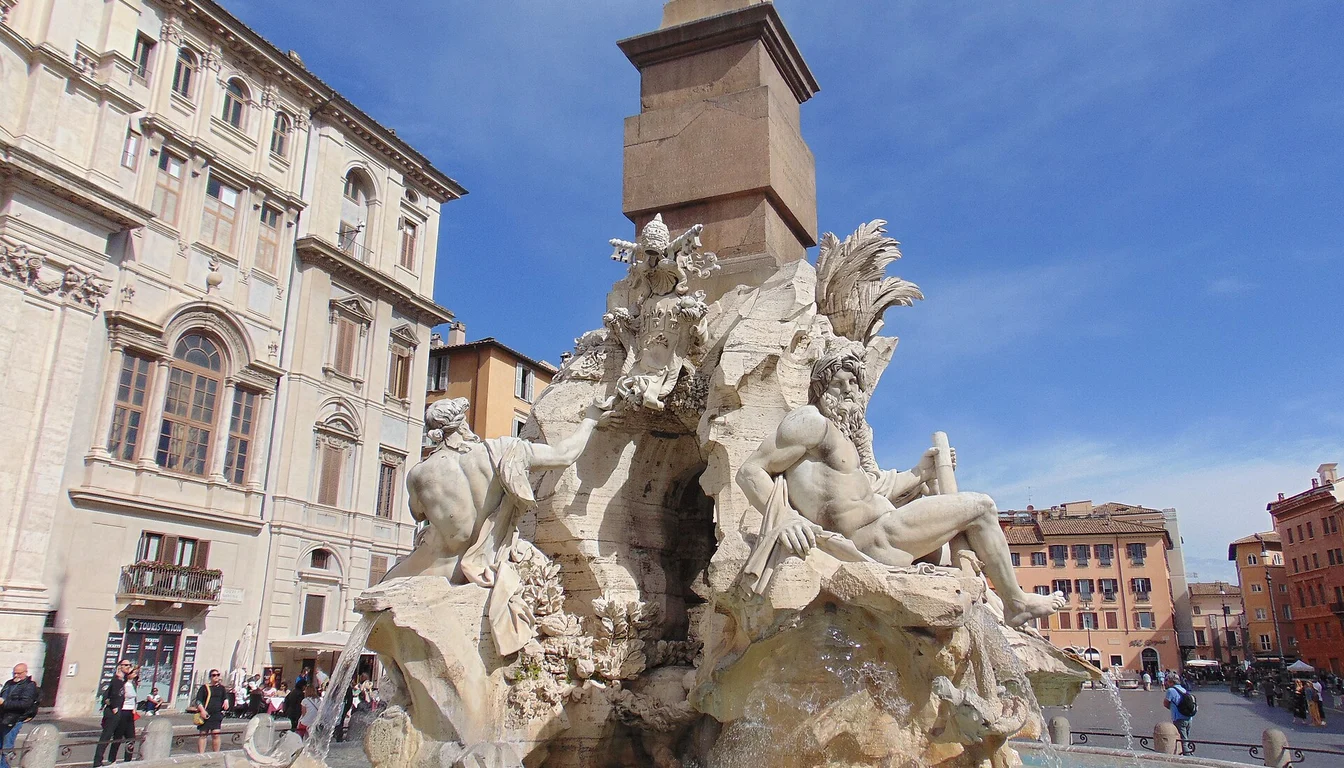
The Fountain of the Four Rivers in Rome is the large fountain at the center of Piazza Navona. Its shape rewards a slow circuit. From one side you see an obelisk and a mass of stone; from the next, a river figure or an animal becomes clear. Give the fountain a few minutes before deciding where to go next.
Walk around the central fountain in Piazza Navona to see its four river figures and animals below its tall obelisk. The figures stand for the Danube, Ganges, Nile and Río de la Plata. The square is an easy stop on a central Rome walk. Keep clear of the basin, check any restoration barriers and choose a wider view before moving close for detail.
Understand the Fountain of the Four Rivers in Rome
The fountain uses four river figures to represent continents known to its seventeenth-century creators. The Danube stands for Europe, the Ganges for Asia, the Nile for Africa and the Río de la Plata for the Americas. A carved rock base supports the obelisk. Fountain visitor information, checked 14 October 2026.
The Nile figure’s covered head reflects uncertainty about the river’s source at that time. A popular story ties the pose to the church opposite, but that is a legend rather than a sound account of the design. You do not need the rivalry story to enjoy the work.
Start with the whole shape. Then look for a river figure, the plants and animals beside it, and the way water meets the rock. This gives the fountain a clear structure without requiring a long art lesson. Children can choose one animal to find while adults look at the larger scene.
Make one complete circuit
Begin at a spot where you can see the obelisk and the base together. Walk to the next open side rather than leaning over a crowd. The figures face different directions, so a single front-on photo misses much of the design.
Pause where the view is clear, then step back to keep the path open. The square has people on foot and groups trying to take pictures. A full circuit is easier when everyone in your party knows the next meeting point.
The two other fountains in Piazza Navona help you read the square as a whole. After the central fountain, move toward one end and look back along the long space. The shape of the piazza is as useful to notice as each single sculpture. Piazza Navona.
- Take a wide view first, then look for details.
- Walk around the base rather than choosing one “correct” angle.
- Meet at the edge of the square if your group spreads out.
Choose when to visit the Fountain of the Four Rivers in Rome
An earlier visit can make it easier to move around the square. An evening visit offers a different mood, with the buildings and street life sharing your attention. Neither time guarantees a quiet space or a perfect photograph.
Allow around twenty minutes for the fountain and a look across the piazza. Use more time if you enjoy sculpture or want to see the nearby church when it is open. Treat this as a loose planning budget. The square can also be a brief stop between two other sights.
Restoration, events or crowd controls can reduce the view. A city listing may show a beautiful open scene while temporary barriers remain in place on your visit. Check any access note before a special journey. If one side is blocked, enjoy the open views and avoid trying to cross the barrier.
Pair the fountain with a practical walk
Piazza Navona works well in a central Rome walk. Choose one onward direction rather than crossing the city for the next famous sight. A route toward the Pantheon area keeps the day compact. A riverward route can lead toward Castel Sant’Angelo.
Do not count a square visit as a reserved indoor attraction. It is flexible time, which makes it useful before a meal or after a museum. Save enough of that flexibility to sit somewhere suitable and rest. The fountain edge itself is not the place for a picnic.
If a church visit matters, check its access separately. A fountain in a public square and a worship space next to it follow different rules. Dress for the church before you arrive rather than hoping an outdoor walk means there are no entry requirements.
- Keep the route to one side of the city center.
- Check indoor openings separately from the square visit.
- Leave the next stop optional if you are already walking a lot.
Look after the monument and your belongings
The fountain is decorative. Do not climb into it, sit on delicate parts or dip bottles in the basin. Step aside to organize your bag or take a longer video. A close look can still be respectful.
Crowds can draw your attention away from your possessions. Keep a phone secure between photos and avoid placing a bag on the ground while you stare up at the obelisk. If someone distracts you, look after your party and belongings before continuing the conversation.
- Keep hands and feet out of the basin.
- Do not use the monument as a camera support.
- Respect barriers even when they spoil an angle.
FAQ
Which rivers does the fountain represent?
The Danube, Ganges, Nile and Río de la Plata stand for four continents in the fountain’s design. Look for a river figure and the plants or animals beside it as you move around the base. A complete circuit helps reveal the different sides, which a single front-facing photograph can miss.
Where is it in Piazza Navona?
It is the large central fountain with the tall obelisk in Piazza Navona. The square has two other major fountains, so check the whole setting before focusing on details. Start where you can see the base and obelisk together, then move around the open sides without blocking other people’s path.
How much time should I allow?
About twenty minutes is a loose allowance to circle the fountain and look across the square. Add time if you enjoy sculpture or want a nearby indoor visit. Those indoor stops need separate access checks. The fountain can also be a flexible pause between other central sights rather than a fixed appointment.
Is the covered face a joke about the church?
That is a popular legend rather than the sound explanation given here. The city’s account links the covered head to uncertainty about the Nile’s source at the time. Look at the figure in relation to the river design, and keep the rivalry story separate from the sourced account of the work.
Can I see it at night?
An evening square walk can give you a different view of the fountain and surrounding buildings. It does not guarantee an empty space or unrestricted access to every side. Check temporary events and barriers, then use the open views. Keep the next stop flexible rather than timing the visit around a promised photograph.
Plan the next part of your visit
Verdict
The Fountain of the Four Rivers in Rome is worth a complete circuit, not just a quick front-on photo. Read the figures and animals, enjoy the wider square and keep your onward walk compact. The best visit is short enough to stay relaxed and slow enough to see the design.