
Rome highlights and walks
Free Things to Do in Rome: A Practical Plan for 2026
This page contains affiliate links to Trip.com: we earn a commission if you buy through one, at no extra cost to you.
Build a free Rome day around squares, churches, parks and museums with current visitor eligibility checks.
· Independent travel guidance
Open the guide sections17
- Choose free things to do in Rome by route
- What changed for free museums in 2026
- Make the central squares a complete visit
- Use exterior views without mistaking them for entry
- Add churches with current access checks
- Choose gardens and hill views by effort
- Use a neighborhood walk for daily Rome
- Make an always-free museum fit the day
- Treat free-entry dates as distinct events
- Keep transport and food in the budget
- Build a low-cost day with one paid anchor
- Plan free things to do in Rome with children
- Check accessibility on the actual route
- Avoid stale free-attraction claims
- FAQ
- Plan the next part of your visit
- Verdict
Compare booking options
Pantheon, Trevi, Spanish Steps and Piazza Navona guided walk
- An English guided walk through the named central Rome sights
- Pantheon entry on the full guided-tour package
Our verdict: An optional paid alternative when you want a guide; the public-square walk in this guide remains a separate independent choice.
Keep in mind: Select the full English guided tour. The Pantheon-only option omits the wider walk, and the sunset option views the Pantheon from outside. Check the selected package before paying.
View at Trip.comFree things to do in Rome work best as a connected day, not a hunt for scattered no-cost pins. Squares, exterior views and gardens, with some churches can make a full visit. Museum eligibility needs more care in 2026. Choose a compact route first, then add a free indoor stop only after checking that its current rules apply to you.
Build a free Rome day around public squares, exterior landmarks and a short garden or river walk. Check worship access before adding a church. Do not assume an older free-museum list still applies to tourists: municipal pricing changed in February 2026. Pick one part of the city, keep meals and transport in the budget and treat free-entry dates as separate booking decisions.
Choose free things to do in Rome by route
Start with the part of the city you will already be in. A square near your morning stop is more useful than a distant free museum that requires a long paid journey. Saving on admission is only one part of the day’s cost.
Use one main walking theme. A central squares route, a river-and-neighborhood route or an outdoor ancient-city route each gives you a clear focus. You can enjoy one fully without trying to cover all three.
Decide how much walking you want. A no-admission day can still be tiring, and a map full of free stops can tempt you to walk farther than on a paid museum day. Put a rest and a meal into the route before adding the optional extra.
What changed for free museums in 2026
Municipal museum pricing changed from 1 February 2026. The city’s current information distinguishes residents of Rome’s metropolitan area from tourists and other nonresidents. A resident’s free admission does not establish that a visitor can enter free. Municipal pricing update, checked 14 October 2026.
The city’s free-admission page now identifies four museums that remain always free for tourists. Among them are the Museum of the Walls, the Museum of the Roman Republic and the Museum of Casal de’ Pazzi. Check their own opening and reservation rules before planning around them. Current free-museum list.
This makes older “all free Rome museums” posts unreliable as a ready-made plan. Use the current list and your visitor category, then check the individual site. An always-free admission rule is not a promise of daily opening or walk-in access.
Make the central squares a complete visit
Piazza Navona offers a clear fountain-and-square stop. You can walk around the Fountain of the Four Rivers and look at the long piazza without making an indoor visit. The Spanish Steps give you another public-space option, with a climb you can choose or skip.
These stops are not next door to each other, so connect them with a sensible walking route. Keep the middle of the day loose enough for a seat and food. A compact selection often feels richer than racing through every famous square.
- Choose Piazza Navona for a fountain and public-space focus.
- Choose the Spanish Steps for a lower-square view or optional climb.
- Choose the Capitoline square for a civic setting above the ancient city.
Check any current barriers or event arrangements. Public-space access can change, and a particular viewpoint may be restricted even when the surrounding walk remains open. Enjoy the permitted route instead of trying to recreate an old photograph.
Use exterior views without mistaking them for entry
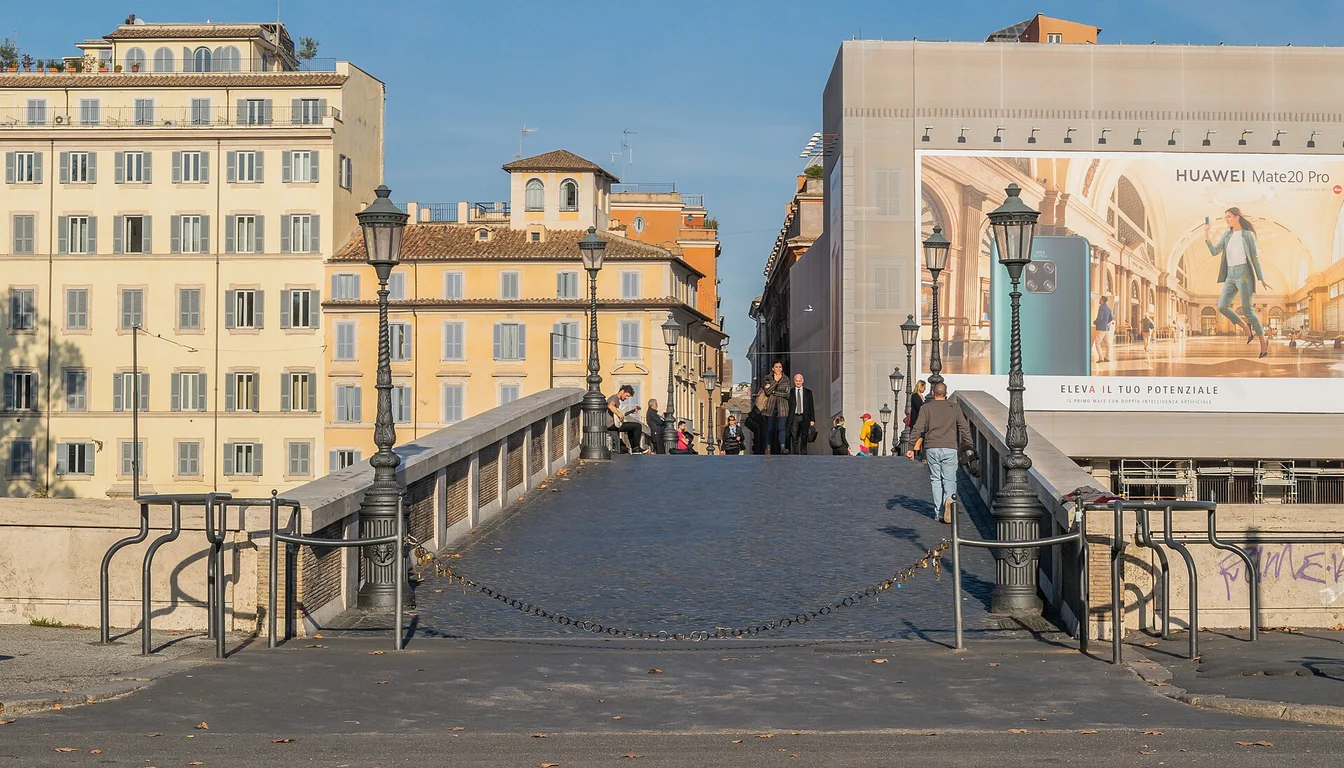
An exterior view of a landmark can be a worthwhile stop. The river bridge at Castel Sant’Angelo, for example, gives the fortress a clear setting. That outdoor experience is different from visiting the museum inside.
The same distinction matters around ancient Rome. A view from a public path can help you read the ruins, but it does not give entry to the Forum or Palatine. If those interiors are the main reason for your trip, decide whether to budget for them rather than pretending an outside glance is the same visit.
Plan the day honestly. A free outdoor route is a complete choice when you want it. It can also surround one paid anchor. Neither version requires you to buy several tickets just because the landmarks are close together.
Add churches with current access checks
Churches can offer art and quiet time within a walking day. They also remain places of worship. A free-looking doorway does not establish unrestricted public entry or entry to every chapel or museum, or an attached area.
Check the church you actually want to visit. At Santa Maria in Trastevere, the city listing directs visitors to confirm mass times and visiting conditions with the church. Use that approach elsewhere too: check current conditions and give services priority. Basilica visitor information.
Keep clothing and behavior suited to the space. A short respectful visit can be better than a long attempt to see every detail. Save eating, loud conversation and bag sorting for somewhere else.
Choose gardens and hill views by effort
The Aventine offers a framed keyhole view and the broader Orange Garden panorama as distinct stops. They make a useful outdoor pairing if you can manage the climb and current garden access. Aventine guide.
Treat a hill as part of the effort budget. A “free viewpoint” can still take a long uphill walk, especially late in the day. If the party is tired, a lower river walk may be the better free option.
Check seasonal or limited openings before planning a garden as your main stop. A public park, a special garden and an indoor botanical visit may have different rules. Do not take one broad park label as proof that every part is free and open.
Use a neighborhood walk for daily Rome
Trastevere can give you a lane-and-square walk without a paid attraction. Testaccio can give you a street-and-river route, while Prati offers a different broad-street setting. Choose the kind of scene you want rather than comparing them only by cost.
A meal or market purchase is optional, but it is still part of the budget if you plan to make it. A food-focused district visit should not be presented as free just because the streets have no admission charge.
Keep a neighborhood route compact. A clear arrival point, one main square and a return stop are enough for a useful walk. You do not need a guided product if you are happy with a self-led route and the public places it covers.
Make an always-free museum fit the day
Start with the current tourist list, then choose by content and location. Choose the Museum of the Walls for a city-fortification interest. For modern history, consider the Museum of the Roman Republic. The Museum of Casal de’ Pazzi offers a different prehistoric focus.
Do not visit one solely because the ticket costs nothing. A subject you do not care about and a long journey can make it poor value for your time. Choose the museum you would actually enjoy, then put its access requirements first in the plan.
- Check the current visitor category.
- Check the opening date and reservation requirement.
- Check the journey and final entrance.
- Keep a nearby outdoor fallback.
If the museum has limited access, make the rest of the route flexible. A closed or full session should not leave the whole day empty. The nearby public walk can carry the afternoon while you decide whether to return.
Treat free-entry dates as distinct events
A free-admission day can have its own crowd and booking arrangements. Do not assume that every Rome museum follows the same calendar or that all ticket types become free. Check the individual site for the date you want.
Look at what is included. A temporary exhibition, guided route or special area may have different rules from ordinary admission. A general calendar label is not enough to establish access to every space.
If the visit is important, compare the free date with an ordinary paid date. A busy free session may be less enjoyable than a quieter visit you can afford. The best choice is the one that fits your priorities, not always the lowest headline price.
Keep transport and food in the budget
Calculate the whole day. A long transfer, a meal near a busy landmark and several drinks can cost more than one modest admission fee. Set aside money for the parts you actually need, even when the sightseeing route is free.
Walking can reduce transport costs, but it should not become an endurance plan. Choose a route that your party can finish comfortably. A paid ride back after a tiring day may be a sensible use of the budget.
Carry water and a small day bag. Plan proper meal and toilet opportunities rather than expecting every free attraction to provide services. The absence of an admission fee tells you nothing about facilities.
Build a low-cost day with one paid anchor
If you want to enter a major ancient site, choose it first. Then build the free parts around the reserved visit. A square walk before the booking and a neighborhood meal afterward can keep the day varied without adding another ticket.
Compare the access you need. A Colosseum product can include different areas, and a more expensive route may be worthwhile only if those areas interest you. Avoid paying for extras to complete a list you did not want in the first place.
Keep the free route flexible around security and the main visit. A delay does not need to spoil every later stop. One optional outdoor branch is a useful release point when the schedule grows longer.
Plan free things to do in Rome with children
Give the route a simple purpose. A child can look for one fountain figure, compare a staircase shape or find the river crossing. A long chain of adult photo stops can be tiring even when each one is free.
Put a seat and food break into the plan before the mood drops. Save the longest climb for a time when everyone has energy. A shorter route completed happily is more useful than a full list finished with an exhausted party.
Avoid describing every paid alternative as something the family is missing. A garden or public square can be the chosen activity. If one ticketed site matters, budget for that single visit and keep the rest simple.
Check accessibility on the actual route
Free access does not mean easy physical access. Cobbles, stairs and hills appear in public spaces as well as paid sites. Check the path between the specific stops you choose.
For an indoor museum, confirm the entrance and the areas you want to reach. For a garden, check gates and the walking surface. A map may favor a shorter route that is less suitable than another public approach.
- Keep a no-climb version of the walk.
- Ask about a chosen entrance when needed.
- Shorten the final branch if the party is tired.
Avoid stale free-attraction claims
Before saving a long list, check its date and the difference between residents and tourists. Some places once listed as universally free now have visitor admission charges. Others remain free but require a reservation or have limited opening.
- Do not assume resident benefits apply to visitors.
- Do not treat a free date as permanent daily entry.
- Do not call a food or transfer package free.
- Do not expect every exterior view to replace an indoor visit.
FAQ
Can I fill a Rome day without paid admission?
Yes. A compact route through public squares, exterior views and a garden or neighborhood can make a complete day. Choose nearby stops so travel does not consume the saving. Food and transport still belong in the budget, and an exterior view should not be mistaken for free entry to the building beside it.
Are all municipal museums free for tourists?
No. The current municipal pricing distinguishes residents from tourists, so older blanket lists can mislead visitors. Use the current tourist eligibility information and each site’s own rules. Even an always-free museum can have opening or reservation limits. Confirm the indoor stop before making it the fixed centre of your day.
Does “always free” mean I can arrive whenever I like?
No. Free admission describes the cost, not unrestricted arrival. Opening days, capacity and reservation rules can still apply. Check the chosen museum’s current conditions and arrange the rest of the walk around any required slot. Keep an outdoor fallback nearby if the indoor visit cannot be confirmed for your date.
Are churches always free and open?
Do not assume every church is freely open for sightseeing at all times. Services, attached areas and visitor conditions can affect access. Check the church you intend to visit, dress appropriately and follow directions inside. Public square time can remain flexible around it without promising entry during worship or into every adjoining room.
Should I visit on a free-entry date?
Choose a free-entry date if the actual access and schedule suit your visit. Compare booking requirements, possible queues and included spaces with a normal day. Saving the admission cost is useful only if the route still works. Do not assume a free event grants every premium area or removes the need to plan.
What is the best budget strategy?
Choose one compact route and include food and travel in the budget. Pay for only the major interior visit you actually want, then keep nearby squares and district walks flexible. This prevents small transport costs and duplicate bookings from eroding the saving while still leaving a clear main purpose for the day.
Plan the next part of your visit
Verdict
Free things to do in Rome can make a full, thoughtful visit. Build the day around a compact public route, check current museum eligibility and keep effort in the budget as well as money. One chosen paid anchor can fit if it matters; the rest does not need another ticket.