
Rome highlights and walks
Piazza Venezia in Rome: Plan Your Stop in 2026
Navigate Piazza Venezia’s construction, choose a nearby museum and connect a walk through ancient Rome.
· Independent travel guidance
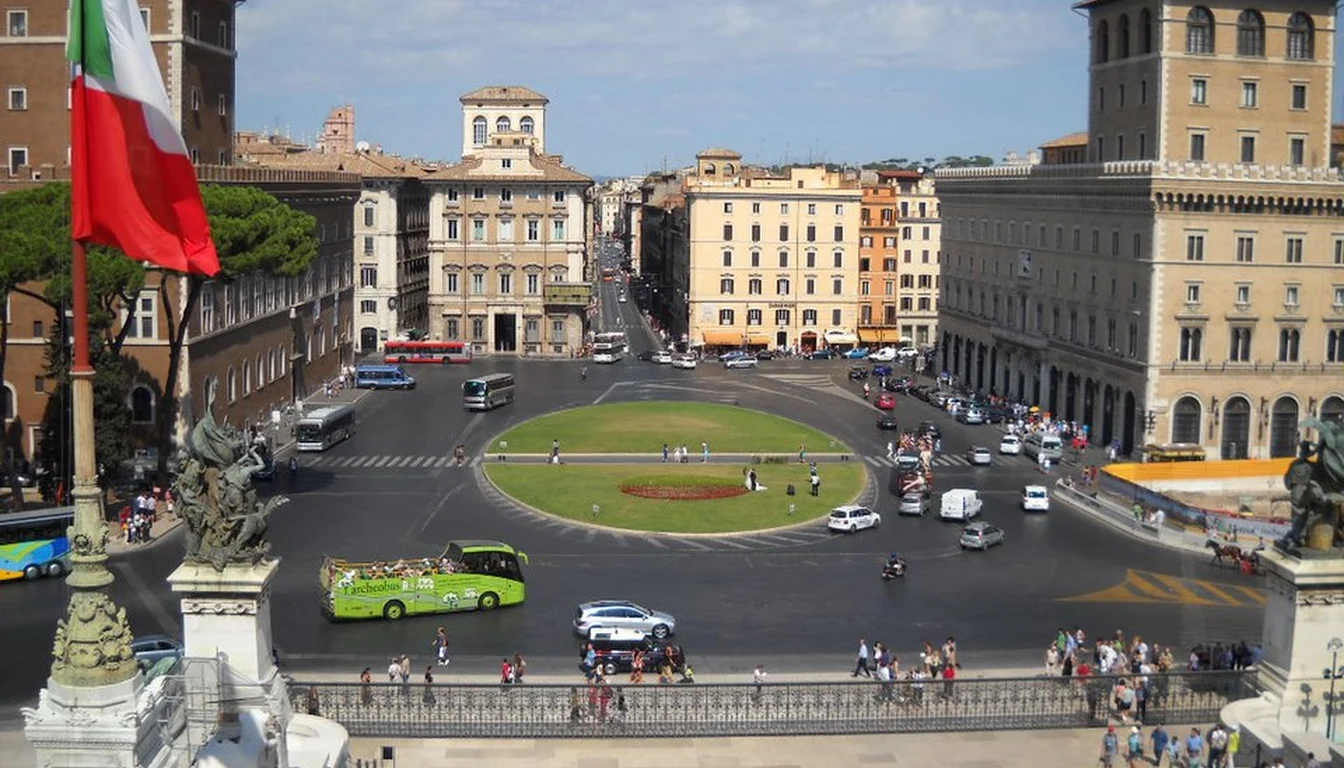
Piazza Venezia in Rome is a junction as well as a landmark. It sits below the Capitoline Hill and connects several useful walking directions. Ongoing construction makes it a place to navigate with care, rather than a square where you can always wander straight across.
Use Piazza Venezia as a link between central Rome and the ancient-city area. Choose a marked crossing, allow for Metro C works and select one nearby stop. The Capitoline Hill, museums and the Vittoriano are separate visits with different access rules. If you only want the square’s setting, keep the stop brief and continue along one clear walking route.
Understand Piazza Venezia in Rome
The square lies at the foot of the Capitoline Hill. Major streets lead away from it, so it often appears in a walking day even when it is not the main attraction. The city tourism guide describes several nearby museums and buildings. Museums around Piazza Venezia, checked 14 October 2026.
Use the large white monument as an orientation point, but do not let it turn into an assumed entrance for every nearby attraction. The square, the monument’s different spaces and the surrounding museums are distinct. Check the part you want to visit.
What changed around Piazza Venezia for 2026
The Metro C station works have changed the traffic layout. The city mobility service records a new arrangement introduced in November 2025, with one-way traffic on the side below Palazzo Venezia. It describes a long construction period and notes that adjustments may still be needed. Piazza Venezia road update, checked 14 October 2026.
Do not use a photograph from before the works as a crossing plan. Follow today’s barriers, marked crossings and signs. A street route that looks short on a map can include a detour around the site. If you arrive by bus, check the current stop and direction in the live planner.
Leave extra time for the last part of the walk when you have a fixed museum or tour entry nearby. The construction changes the approach, but it does not mean you must abandon the whole area.
Choose one nearby visit
The Capitoline Hill suits a short outdoor square stop or a longer museum visit. The ancient Forum route suits a ruins-focused day. A museum near Piazza Venezia can make the square a useful indoor starting point if you check access first.
Choose based on your remaining time. If you have a booked ancient Rome entry, use Piazza Venezia for orientation and keep another museum optional. If the afternoon is free, choose one indoor place and leave time to enjoy it.
- Choose the Capitoline for the civic square and museum option.
- Choose the Forum direction for an ancient-city walk.
- Choose a nearby museum when you want a focused indoor stop.
Walk through Piazza Venezia in Rome safely
Move to the edge of the pedestrian route before looking at your phone. A large open-looking area may still carry buses, cars or construction traffic. Use the crossing that is open, even if it adds a little walking.
Agree on the next landmark with your party. A group that spreads out across several crossings can waste time finding one another. If anyone walks slowly, keep the route to one side of the square and choose a single safe crossing.
Do not climb barriers for a photograph. A view from a permitted path is enough. Construction can be part of what you see in the square today, and there is no need to pretend it is absent.
Keep the next leg compact
A route toward the Forum and Colosseum follows an ancient Rome theme. A route toward the wider historic center changes the focus to streets and squares. A return toward the Jewish quarter gives you a different neighborhood walk. Pick one.
Leave room for a rest after a climb. The nearby hill and monument can involve steps, and a museum can add long periods standing. A map that puts several famous places close together does not account for that effort.
- Save the next landmark before starting.
- Avoid stacking two climbing stops without a break.
- Recheck the bus stop if the return is by public transport.
Avoid ticket and route assumptions
A ticket with “Rome” in its name is not a pass to all nearby buildings. Read the attraction and included areas. If a terrace or exhibition is your goal, confirm its separate entry details.
- Do not assume museum entry from an open public approach.
- Do not rely on the historic location of a bus stop.
- Do not promise a step-free route without checking it.
FAQ
Is Piazza Venezia a useful sightseeing stop?
Yes, especially as an orientation point between central Rome, the Capitoline and the ancient city. Nearby indoor visits are separate choices, so decide whether you want a brief square stop or a longer attraction visit. Construction and crossings can affect the approach. Keep the next direction clear instead of trying every branch at once.
Are construction works still relevant?
Yes. The retained mobility information describes Metro C construction and an altered road layout. Conditions can adjust further, so read signs and choose the usable crossings on the day. A saved map may not show the current pedestrian approach. Include room for a detour rather than relying on a straight route across the square.
Can I visit all nearby buildings on one ticket?
Do not assume one booking covers the nearby buildings. Each attraction and its included areas need a separate check. A visit to the public square is also different from indoor admission or a terrace route. Choose the main interior you want before buying, rather than collecting tickets simply because several sights sit close together.
How long should I allow for the square alone?
A brief orientation stop can be enough for the square itself. Add time for construction-related crossings, the Capitoline climb or a chosen indoor visit. This is flexible walking time rather than a fixed tour length. Decide the next direction before arriving so the stop does not become repeated backtracking through the junction.
What is the simplest onward route?
Choose one direction toward the ancient city, central sights or the Jewish quarter, according to the rest of your day. Avoid zigzagging between all three. If an indoor visit or hill climb is your main goal, give that route priority and leave the other branches optional, with current crossings guiding the actual approach.
Plan the next part of your visit
Verdict
Piazza Venezia in Rome is most useful as a clear junction in your day. Allow for the works, cross carefully and choose one nearby attraction. A compact onward route makes the area easier to enjoy than a list of tightly packed stops.