
Rome highlights and walks
The Spanish Staircase in Rome: A Visit in 2026
Visit the Spanish Steps with a route that works from the lower square to the upper terrace.
· Independent travel guidance
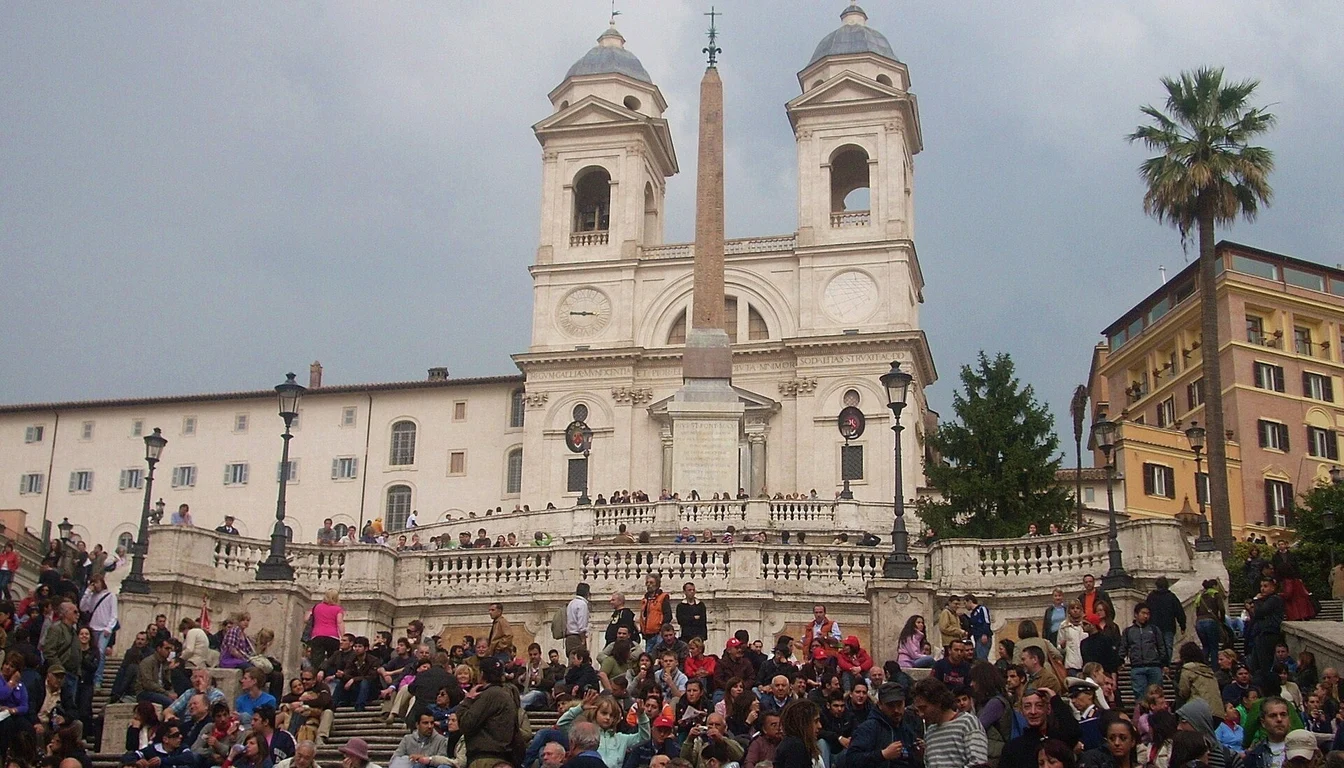
The Spanish staircase in Rome is the Spanish Steps, linking the lower square with the church above. It can be a short photo stop or part of a longer walking route. Decide whether you want to climb before arriving. A good view from below can be enough if your legs need a break.
See the Spanish Steps from Piazza di Spagna first, then climb only if the upper view fits your route and energy. Keep the steps clear, follow posted rules and choose a proper place for a rest. The lower square, staircase and church are separate parts of the visit. An early stop can help with movement, but no time guarantees an empty scene.
Understand the Spanish staircase in Rome
The broad steps connect the square below to the church at the top. The city guide describes them as a major shaped urban space, not simply a way to get uphill. Their curves and changing width are worth noticing from a little distance. Spanish Steps visitor information, checked 14 October 2026.
Take in the lower square first. Look at how the staircase rises through several levels rather than following one straight flight. You do not need to know every building around it to understand the effect. A wide view can be more revealing than a close shot of the crowd.
Choose the lower square or the climb
The lower square suits a brief stop on a central walk. You can see the main shape without spending time climbing and coming back down. It is a sensible choice if the day already includes hills or a long museum.
The climb suits a route that continues from the upper level. Decide your next final stop before going up. A climb followed by an immediate descent is fine if you want both views, but it can be a poor use of energy for someone with sore feet.
- Stay below for the whole staircase view.
- Climb for a closer sense of the levels and the upper setting.
- Use another route if steps do not suit your needs.
Allow about twenty to thirty minutes for a relaxed look and climb, without an indoor church visit. This is a planning budget. It can change with crowds and your pace. A short stop at the foot of the steps can take much less time.
Plan the Spanish staircase in Rome around your walk
Pair the stop with the nearby central streets or a longer walk toward the gardens and viewpoints above. Choose one direction before starting. That keeps the stairs from becoming an extra climb you repeat later in the day.
If the church is your goal, check its current access separately. A public staircase does not prove that an indoor worship space is open to visitors. Wear suitable clothing and be ready to wait outside during services.
Leave enough time for a rest away from the main flow. The steps are busy transit space. Sitting for a meal or unpacking a bag on them can obstruct people and may conflict with posted rules. Find a suitable place to pause elsewhere.
Choose light without chasing an empty photograph
An earlier visit can make it easier to see the outline and move around. Late-day light may be pleasant, but the square can still be busy. Weather and events change the scene more than a fixed “best photo hour” suggests.
The city guide describes a seasonal azalea display, but flowers are not a year-round feature. Do not plan an autumn or winter visit around spring photographs. Enjoy the stone shape and setting that remain when the display is absent.
- Take the wide view before close pictures.
- Keep everyone’s return route clear.
- Treat seasonal flowers as a bonus, not a promise.
If your group wants portraits, move to a place where people can pass. A photograph is easier when the person taking it knows the frame before the subject steps into place. Long attempts in the middle of the stairs create friction without improving the day.
Make the stop comfortable
Steps can become tiring late in a walking day. Wear shoes with grip and take the descent slowly after rain. A crowded route gives less room to choose a comfortable pace, so the lower view may be the better option.
For a mobility need, plan a suitable approach to the view you want. Do not assume that a named nearby transport stop provides a step-free route all the way. Check the current entrance and street leg. A no-climb visit can still offer a strong view of the staircase.
Keep your phone and bag secure while you look up. The busy setting can distract you, and a crowded staircase is not a good place to spread out belongings. Organize them at the side before the climb.
Avoid a rushed detour
The stop is flexible, so let it fit your route. Do not cross the whole city for a few minutes here between two fixed admissions. You may get more from a slow square stop than from trying to climb during a narrow gap.
- Do not add an uphill route without a return plan.
- Do not assume the church follows the square’s access.
- Do not block steps or climb barriers for a photograph.
FAQ
Are the Spanish staircase and Spanish Steps the same place?
Yes. The English visitor name is the Spanish Steps, rising from Piazza di Spagna toward the church above. The staircase and lower square can be a short stop without an indoor visit. Decide whether you want to climb or view the shape from below before fitting the stop into the rest of your walk.
Do I have to climb to enjoy them?
No. The lower square gives a clear view of the staircase’s overall shape and can be enough if your legs need a break. The climb is a separate effort, not a requirement for enjoying the landmark. Keep the upper route optional and choose the next direction according to the group’s energy.
Can I plan a church visit at the top?
Yes, when the church’s current visiting conditions allow it. Check its services and visitor arrangements separately from the public steps. A climb does not establish entry inside, and worship can affect sightseeing. If the church is your main goal, confirm that part first and leave the outdoor view flexible around it.
Are the flowers always present?
No. The azaleas are a seasonal display, so a photograph with flowers does not establish the same scene throughout the year. The staircase’s structure still makes a useful stop without them. Plan for the actual visit conditions and treat a floral display as a possible extra rather than the reason for a special detour.
How much time should I allow?
About twenty to thirty minutes is a loose allowance for a relaxed look and climb. Add time for a church visit, a pause or a longer upper walk. If you only want the view from below, the stop can be shorter. Include the approach in your day instead of treating the landmark as an instant photograph.
Plan the next part of your visit
Verdict
The Spanish staircase in Rome is easy to enjoy when you choose your view first. Take in the shape from below, climb if it fits the route and keep the steps clear. A short, calm stop is better than an extra climb you do not need.